INTRODUCTION
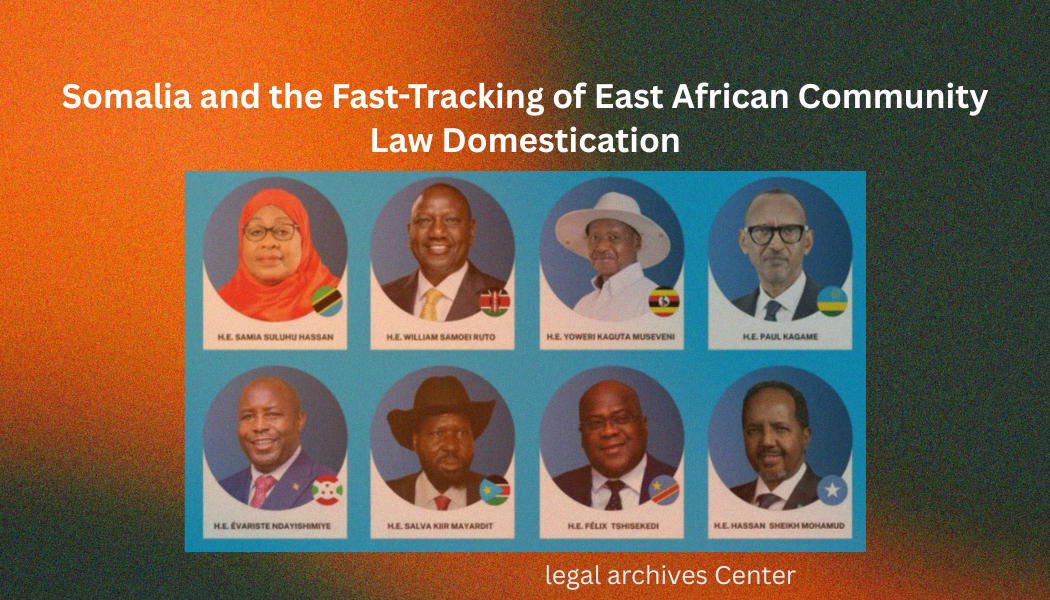
The Heads of State of the East African Community (EAC) held their 25th Ordinary Summit in Arusha, Tanzania, attended by leaders or representatives of Kenya, Burundi, Tanzania, Uganda, Somalia, Rwanda, South Sudan, and the Democratic Republic of Congo. The meeting focused on deepening regional integration and improving the livelihoods of EAC citizens. The principal decisions and outcomes adopted during the Summit are summarized below.
1. Peace and Security in Eastern Democratic Republic of Congo: The Summit reviewed the progress of the EAC-led Nairobi peace process addressing the conflict in eastern DRC. Leaders acknowledged improvements toward restoring stability, commended the leadership of the EAC Chairperson in steering the peace initiative, called on all parties to observe an immediate ceasefire, and urged the African Union to provide financial and logistical support to the mediation process. Coordination between the ICGLR initiatives and the African Union was also emphasized.
2. Reform of the EAC Financing System: The Summit adopted a new financial contribution formula for the EAC budget consisting of 50% equal contributions and 50% assessed contributions based on economic capacity, effective 1 July 2026. Additionally, 50% of outstanding arrears owed by partner states were waived, provided the remaining balance is paid within two years.
3. Trade and Economic Integration: Leaders directed measures to strengthen the regional market by removing non-tariff barriers to trade by 30 June 2026, finalizing a joint action plan to enhance trade relations among EAC institutions, governments, and the private sector, and launching the EAC Customs Bond system to facilitate cross-border trade. The Summit also adopted the 7th EAC Development Strategy (2026/27-2030/31).
4. Integration of New Member States: The Summit issued directives regarding newer EAC members. South Sudan must complete domestication of the EAC Treaty, while Somalia and the Democratic Republic of Congo must accelerate domestication. Negotiations on the DRC integration roadmap should be concluded by 30 June 2026, and integration roadmaps for South Sudan, Somalia, and DRC must be fast-tracked. Additionally, Rwanda, Tanzania, South Sudan, DRC, and Somalia should complete national consultations on the EAC Political Confederation Constitution by 30 June 2026.
5. Institutional and Governance Reforms: The Summit introduced governance reforms requiring two-thirds quorum of partner states for meetings of EAC organs and institutions. It also reaffirmed that nominations for senior EAC positions must comply with Article 8 of the EAC Treaty, including ratification of legal instruments, domestication of the Treaty, and implementation of integration roadmaps. Furthermore, beginning December 2027, members of the East African Legislative Assembly (EALA) will be remunerated by their respective national assemblies.
6. Administrative and Institutional Appointments: Several leadership appointments were confirmed. Ambassador Stephen Patrick Mbundi (Tanzania) was appointed Secretary General of the EAC for a five-year non-renewable term starting 25 April 2026. Andrea Aguer Ariik Malueth was renewed as Deputy Secretary General for Infrastructure, Productive, Social, and Political sectors, while Annette Mutaawe Ssemuwemba was appointed Deputy Secretary General for Customs, Trade, and Monetary Affairs.
7. Judicial Appointments to the East African Court of Justice: The Summit appointed Justice Diejo Stephen Abraham, Abdiwahid Warsame Abdullahi, and Anne Atieno Amadi as judges to the First Instance Division of the East African Court of Justice, effective 7 March 2026.
8. Budgetary and Legislative Approvals: The Heads of State approved key legislative measures including the East African Community Appropriation Bill 2024 and the East African Community Statistics Bureau Bill 2025.
Fast-Tracking Somalia’s Compliance with the East African Community Integration Framework
Following the discussion of the eight key decisions adopted at the 25th Ordinary Summit of the East African Community Heads of State, particular attention must be directed to the obligations specifically affecting the Federal Republic of Somalia. As one of the newest members of the Community, the Summit emphasized the need for Somalia to first-track its legal and institutional compliance measures in order to facilitate effective participation in the regional integration framework.
Somalia’s Individual Obligations
The Summit directed the Government of Somalia to undertake several measures that fall primarily within its domestic jurisdiction. Somalia is required to accelerate the domestication of the East African Community Treaty within its national legal order. This step is essential to ensure that EAC obligations and legal instruments can be effectively implemented within Somalia’s domestic governance structure. The domestication process generally entails:
Approval of EAC legal instruments by the national parliament, Harmonization of domestic legislation with EAC regulatory frameworks, Establishment or strengthening of administrative institutions responsible for implementing Community policies. Somalia must also advance the implementation of its national integration roadmap for accession into the structures and programmes of the East African Community. This process requires: Alignment of national policies with EAC sectoral frameworks, Execution of integration commitments across key economic and institutional sectors and Participation in the operational and institutional mechanisms of the Community.
Collective Obligations with Other EAC Partner States
In addition to its domestic responsibilities, Somalia is expected to cooperate with other Partner States in advancing broader regional initiatives. Somalia, together with Rwanda, Tanzania, South Sudan, and the Democratic Republic of Congo, is required to complete national consultations on the draft Constitution of the proposed EAC Political Confederation by 30 June 2026.
This process involves, conducting national stakeholder consultations, reviewing government policy positions on the proposed constitutional framework and submitting national feedback to the regional process. Somalia must work in collaboration with the EAC Council of Ministers and other Partner States to accelerate the implementation of integration roadmaps for newer members, particularly Somalia, South Sudan, and the Democratic Republic of Congo.
The concept of fast-tracking of EAC integration
The notion of fast-tracking regional integration within the East African Community (EAC) emerged in the early years following the re-establishment of the Community under the Treaty for the Establishment of the East African Community in 1999. Despite the notable progress achieved after the revival of East African cooperation, regional leaders increasingly expressed concern regarding the pace at which the integration agenda was advancing. At the Nairobi Summit held in August 2004, the Heads of State of the partner states concluded that the rate of progress toward deeper regional integration remained slower than anticipated. Consequently, they resolved to establish a committee mandated to examine practical mechanisms for accelerating the integration process.[1]
The committee was specifically tasked with exploring ways to ‘expedite and compress the process of integration so that the ultimate objective of establishing a Political Federation could be achieved through a fast-track mechanism.’ Its comprehensive report, submitted on 26 November 2004, represented one of the earliest institutional efforts to articulate a structured approach for accelerating the legal, economic, and political integration of the East African Community.[2]
Kamanga questions whether accelerating regional integration through fast-tracking, particularly toward deeper institutions such as a political federation, is compatible with the principle of gradualism embedded in the EAC Treaty, which requires integration to proceed progressively in stages. In this context, the Treaty must be observed in accordance with the principle of pacta sunt servanda, under which treaty obligations must be honored. Consequently, efforts to expedite integration cannot disregard the legal commitments already undertaken by the member states.[3]
Kamanga also observes that the architecture of the East African Community (EAC) integration framework is anchored in the principles of gradualism and pragmatism, whereby policy decisions are expected to reflect prevailing political and economic realities. Gradualism requires regional integration to proceed sequentially through defined stages namely the Customs Union[4], Common Market[5], Monetary Union, and ultimately Political Federation while pragmatism recognizes the need for integration measures to reflect prevailing political and economic realities.[6]
Within this context, the notion of ‘fast-tracking’ integration seeks to accelerate progress toward deeper institutional arrangements beyond the originally envisaged incremental trajectory. Such an approach, however, raises important legal questions as to whether expedited integration remains consistent with the Treaty framework. In particular, the debate engages the interpretation of Articles 5, 7, and 151 of the EAC Treaty, which collectively emphasize the progressive and stage-based nature of the Community’s integration process.
Why this matters for Somalia?
Given Somalia’s recent accession to the East African Community, the debate between gradual integration and accelerated or ‘fast-tracked’ integration carries particular relevance for the country’s legal and institutional adaptation to the regional framework. In practical terms, this dynamic influences the pace at which Somalia is expected to align its domestic legal framework with EAC law, integrate into the Community’s institutional structures, and implement its accession and integration roadmap. While the EAC Treaty envisions a progressive and stage-based approach to regional integration, Somalia’s obligations must therefore be pursued within this gradual framework, even as political initiatives within the Community occasionally seek to accelerate certain aspects of the integration process.
Conclusion
The 25th Ordinary Summit of the East African Community reaffirmed the commitment of Partner States to advance regional integration through strengthened cooperation in security, economic development, and institutional governance. For Somalia, the Summit’s outcomes underscore the need to accelerate the domestication of the EAC Treaty, implement its integration roadmap, and participate in regional consultations on the proposed Political Confederation. At the same time, the debate surrounding the fast-tracking of integration highlights the legal tension between political aspirations for rapid integration and the Treaty’s principles of gradual and stage-based integration. Accordingly, Somalia’s integration into the EAC must proceed within the legal framework of the Treaty while progressively aligning its domestic legal and institutional systems with the Community’s obligations.
[1] Thomas Nzioki Kibua and Arne Tostensen, ‘Fast-tracking East African Integration: Assessing the Feasibility of a Political Federation’ (2010), Chr. Michelsen Institute Report, available at
[2] ibid
[3] Kamanga, K., ‘Fast – Tracking’ East African Integration: Pacta Sunt Servanda Betrayed?’ (2010), Journal of African & International Law, Volume 3, No. 3, African Institute for Comparative & International Law, pp. 697-717
[4] Article 75 (2) EAC Treaty
[5] Article 76 (2) EACT Treaty
[6] Ibid
No comment