
INTRODUCTION
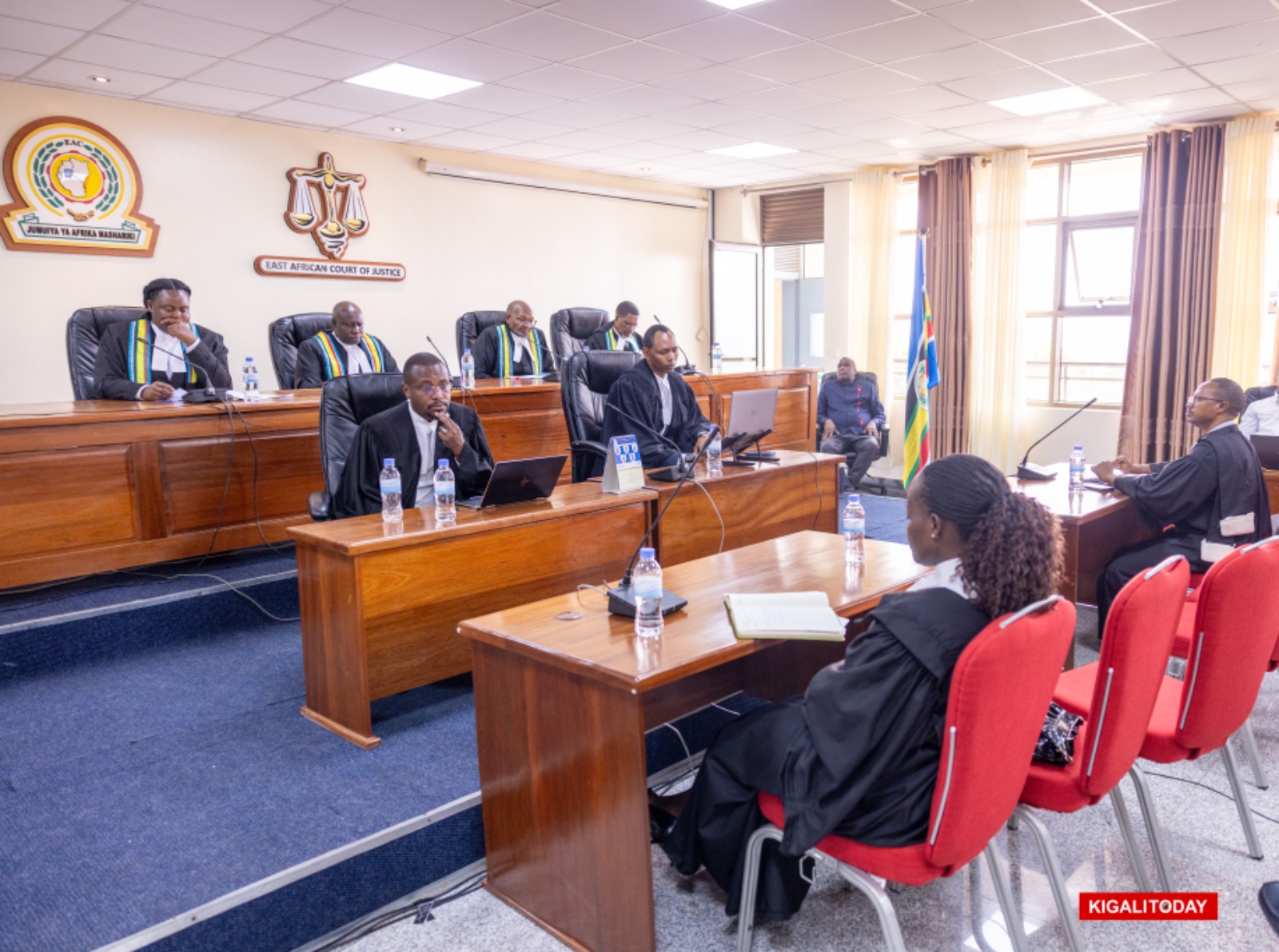
The Appellate Division of the East African Court of Justice, sitting at Arusha, issued an Order on 19 January 2026 in Application No. 3 of 2025 granting interim relief pending appeal.
The Appellate Division of the East African Court of Justice granted a stay of execution of the orders issued by the First Instance (Trial) Division on 21 November 2025, which had restrained the swearing-in, taking of oath, and assumption of office of the nine Somali representatives to the East African Legislative Assembly (EALA). The stay was granted upon an application by the Attorney General of the Federal Republic of Somalia under Rule 87 of the EACJ Rules of Procedure, 2019
Stay of execution simply means: Atemporary court order that pauses or suspends the enforcement of a court decision until a higher court makes a final ruling.
Fundamental Errors of the Trial Court
The Appellate Division did not overturn the Trial Court merely because it disagreed with its outcome. It intervened because the Trial Court committed multiple interlinked legal and factual errors that cumulatively justified staying (and potentially setting aside) its orders. These failures fall into five core categories.
- Misapprehension of Somalia’s political and parliamentary reality: A central failure of the First Instance Court (Trial Court) was its incorrect factual assumption that Somalia operates a conventional parliamentary system with identifiable “ruling” and “opposition” parties. The Appellate Court expressly found this to be factually wrong. It accepted the Applicant’s uncontested evidence that Somalia currently has no political parties in Parliament, and that governance is organized through the 4.5 power-sharing arrangement, embedded in Articles 3 and 4 of the Provisional Constitution (pp. 49-55). Because of this error, the Trial Court: wrongly concluded that Article 50 had been violated for lack of opposition-party participation; relied on a fictional political structure that does not exist in Somalia; and based its reasoning on an erroneous factual premise, which alone was sufficient to vitiate its decision.
- Misapplication of Article 50 of the EAC Treaty: The Trial Court treated Article 50 as if it mandated a specific electoral model, requiring political-party competition and opposition participation. The Appellate Division rejected this approach. It clarified that: Article 50 sets principles, not rigid procedures; the Treaty deliberately leaves procedural design to Partner States and inclusivity must be assessed contextually, not abstractly. By imposing a model unsuitable to Somalia’s constitutional reality, the Trial Court overreached Treaty interpretation and substituted its own preferred system for that chosen by a Partner State. Article 50 is not violated by the adoption of different national electoral models whether party-based, consensus-driven, or power-sharing but only where, assessed within a Partner State’s constitutional and political context, the EALA selection process fails, to the extent feasible, to produce inclusive and representative outcomes reflecting political diversity, differing views, gender balance, and the participation of special interest groups, in accordance with procedures determined by each National Assembly.
- Failure to apply the correct test for interim relief: The Appellate Court found that the Trial Court did not properly apply the established criteria for granting interlocutory relief. In particular, the Trial Court failed to: assess whether the Respondents had established a prima facie case; properly weigh irreparable harm to Somalia and its citizens and balance the public interest in EAC integration against individual grievances Instead, the Trial Court issued sweeping restraining orders that: excluded Somalia entirely from EALA participation; risked rendering the integration mandate ineffective; and caused harm that could not be reversed by damages.
- Erroneous assessment of balance of convenience and public interest: The Appellate Division held that the Trial Court misjudged where the balance of convenience lay. The Trial Court focused narrowly on the Respondents’ interests, while ignoring that: Somalia is a new Partner State; exclusion from EALA affects citizens’ participatory rights and denying representation undermines the collective functioning of the Community. The Appellate Court accepted that the balance overwhelmingly favored preserving Somalia’s participation pending final determination.
- Procedural and precedential errors: Finally, the Appellate Court found that the Trial Court: Ignored or misapplied binding EACJ precedent (Nyong’o, Katuntu); failed to properly evaluate evidence placed before it and reached conclusions inconsistent with its own findings Most notably, the Trial Court relied on precedents dealing with very different political systems, without adjusting them to Somalia’s unique constitutional structure.
The Appellate Division made Five key operative orders:
- Urgency and ex parte hearing: That this Application be certified as urgent and be heard ex parte at the first instance.
- Interim stay pending inter parts hearing: That pending the inter parts hearing and determination of this Application, an order be issued under Rule 87(4) of the Court’s Rules staying the order of the First Instance Division dated 21 November 2025, which restrains the swearing-in, taking of oath, and assumption of office by the nine (9) Members of Parliament elected by the Federal Parliament of the Republic of Somalia to represent it in the East African Legislative Assembly.
- Stay pending determination of the appeal: That pending the hearing and final determination of the Appeal herein, an order be issued staying the order of the First Instance Division dated 21 November 2025, which restrains the swearing-in, taking of oath, and assumption of office by the nine (9) Members of Parliament elected by the Federal Parliament of the Republic of Somalia to represent it in the East African Legislative Assembly.
- Expedited determination: That the Application and the Appeal be heard and determined on an expedited basis.
- Residual discretion of the Court: That the Honorable Court be pleased to grant any other orders it deems just and fair in the circumstances.
The Appellate Court made it explicit that the interim order does not determine the substantive merits of the dispute. In particular, it does not pronounce on the legality of the election, the existence or otherwise of a violation of Article 50 of the EAC Treaty, or whether Somalia complied with the applicable procedural requirements, all of which remain to be resolved in the final determination of the appeal.
Prayer 2 Interim stay pending inter parts hearing
If we check Prayer 2 sought a temporary and immediate stay of the First Instance Division’s order of 21 November 2025 pending the inter parts hearing of the application. The Court granted this relief, thereby suspending the restraining order at the earliest stage and preventing Somalia’s continued exclusion from the East African Legislative Assembly before all parties were heard. The legal effect of the order was to provisionally place the First Instance decision on hold, allowing the nine Somali nominees to be sworn in and assume office on an interim basis, without determining the merits of the appeal or the legality of the election process. The stay functioned as a protective procedural measure to avert immediate and irreparable institutional prejudice.
Swearing-In and the Threshold for Stay of Execution
Under paragraph 57 of the judgment, the Court reaffirmed that a stay of execution is a discretionary remedy, exercisable only where the Applicant demonstrates sufficient cause. Such cause is assessed on a case-by-case basis and is subject to strict conditions: The Applicant must show that refusal of a stay would occasion substantial loss, that the application was made without unreasonable delay, and that appropriate security has been provided to ensure compliance with any eventual decree or order of the Court. These requirements operate as safeguards against the indiscriminate suspension of Trial Court orders.
Against this framework, paragraph 62 clarifies that the swearing-in of EALA members would not, in itself, render the appeal nugatory, since the Court would retain jurisdiction and remain capable of granting effective remedies, including nullification or reversal of the impugned membership. The Court’s reasoning thus distinguishes between jurisdictional competence and practical prejudice: although the appeal would legally survive swearing-in, the availability of discretionary interim relief depends on whether the Applicant satisfies the stringent criteria for stay, particularly the risk of substantial loss. Read together, the paragraphs underscore that non-mootness alone does not justify a stay; rather, interim relief must be grounded in demonstrable prejudice that threatens the efficacy of the appellate process.
Non-Appearance of the Secretary General of the EAC
The Court firmly criticized the Secretary General of the East African Community for failing to appear in a dispute of such significance and rejected the justification that the absence was caused by a vacancy in the office of the Counsel to the Community. In the Court’s view, the existence of a vacancy in a substantive post does not suspend the legal personality or operational capacity of the institution itself. The Secretary General, as the principal executive officer of the Community, retains a continuing obligation to ensure that the Community is properly represented in judicial proceedings, particularly where the matter directly implicates the functioning of EAC organs and the interpretation of the Treaty (See, Paragraph 67-69).
More broadly, the Court grounded its reasoning in the principle of continuity of administrative functions under international and regional institutional law. Public bodies established by treaty are expected to maintain uninterrupted performance of their legal duties notwithstanding internal staffing gaps or transitional arrangements. Allowing institutions to evade judicial accountability due to vacancies would undermine the rule of law and weaken the authority of the Court. The ruling therefore affirms that institutional responsibility to engage with judicial processes is constant and cannot be avoided through administrative omissions or internal governance challenges (See, Paragraph 67-69).
Pre-Seating Intervention and Post-Seating Finality: Somalia’s EALA Representation Before the East African Court of Justice
Somalia’s accession to the East African Community brought with it the right to representation in the East African Legislative Assembly (EALA), but its first nomination process was swiftly challenged for alleged non-compliance with Article 50 of the EAC Treaty. Interim orders of the East African Court of Justice initially halted the swearing-in of Somalia’s nominees, effectively suspending the country’s participation in the Assembly. On appeal, the lifting of those orders marked a decisive shift from exclusion to institutional continuity, reframing the dispute from one of immediate representation to one of procedural compliance. The analysis that follows distils the legal consequences of this shift into five key points.
1. Effect of the Appellate Court’s decision allowing swearing-in
Once the East African Court of Justice (Appellate Division) set aside the interim orders and allowed the Somali nominees to be sworn in, the legal position fundamentally shifted from a pre-seating dispute to a post-seating reality. At that point, the nine representatives acquired the legal status of Members of the East African Legislative Assembly, with all attendant rights and obligations under the EAC Treaty. In EACJ practice, judicial restraint is strongest once representatives have assumed office, as removal would directly interfere with the functioning of a principal organ of the Community and undermine legal certainty.
2. Impossibility of reversing the swearing-in in practical terms
Although courts retain theoretical jurisdiction to pronounce on legality, practical reversibility ends once swearing-in occurs. The Appellate Division’s own order authorizing assumption of office creates a powerful institutional barrier against any later attempt to “undo” representation. EACJ jurisprudence consistently treats pre-seating intervention as permissible, but post-seating disruption as disproportionate. This reflects the logic seen in Anyang’ Nyong’o v Attorney General of Kenya (EACJ, 2006) and Katuntu v Attorney General of Uganda (EACJ, 2012), where timing determined the scope of judicial remedies. Accordingly, a second restraint removing sitting members would contradict the Court’s own proportionality assessment.
3. Likely substantive outcome: declaratory rather than coercive relief
Given the current posture, the most legally plausible outcome is a declaratory judgment addressing whether Somalia’s parliamentary process complied with Article 50 of the EAC Treaty (representation of political parties, opinions, gender, and special interests). Declaratory relief allows the Court to clarify treaty standards without invalidating the status of sitting members. This approach aligns with the EACJ’s established preference for interpretive and guidance-oriented remedies where institutional continuity is at stake, ensuring that treaty compliance is strengthened prospectively rather than enforced through disruptive sanctions.
4. Prospective and corrective directions as an alternative remedy
Beyond declaratory findings, the Court may issue prospective compliance directions, requiring Somalia to adopt clearer internal parliamentary rules or election procedures for future EALA nominations. Such orders preserve the legality of current representation while correcting structural or procedural weaknesses going forward. This technique reflects the EACJ’s broader remedial philosophy: safeguarding Community objectives under Articles 5 and 8 of the EAC Treaty by promoting effectiveness and cooperation, rather than penalizing a Partner State through exclusion from Community organs.
5. Absence of precedent for post-swearing removal in EAC practice
There is no known precedent in which the EACJ, after permitting representatives to assume office, subsequently ordered their removal from EALA. In every comparable dispute, once members were seated, the Court confined itself to declarations or future-oriented guidance. This practice underscores an implicit doctrine of institutional finality: once representation has been judicially restored, disputes about electoral procedure are resolved without destabilizing the Assembly. The Appellate Division’s decision in the Somali case fits squarely within this established line of authority.
Conclusion
The Appellate Division’s Order clarifies the limits of judicial intervention in EALA disputes and corrects key errors made by the Trial Court. It confirms that Article 50 of the EAC Treaty does not impose a uniform electoral model, but requires Partner States to pursue inclusive representation in a manner consistent with their constitutional and political contexts. The decision further explains that while the swearing-in of EALA members does not render an appeal moot, interim relief may still be granted where refusal would cause substantial prejudice and undermine the effectiveness of appellate review. By granting a stay of execution and reaffirming institutional accountability within the Community, the Court preserved the integrity of the appeal while respecting the diversity of governance arrangements among Partner States.


No comment